
Residential Energy Storage
Status: Active
Dates: 2025 to present
Supported by a graduate fellowship from the Georgia Tech Brook Byers Institute for Sustainable Systems, this project examines the potential for residential behind-the-meter energy storage to simultaneously reduce consumer electricity costs, lower utility generation costs, and cut carbon emissions. We compare two commercially available systems across climatically distinct U.S. states (Georgia and Michigan) and under a range of existing and hypothetical electricity tariff structures. A key motivation for the work is the changing shape of residential electricity demand as home heating electrifies: contrary to conventional assumptions, winter morning consumption now drives peak grid usage more than summer afternoons in many scenarios, a trend that has significant implications for how batteries should be designed, operated, and incentivised.
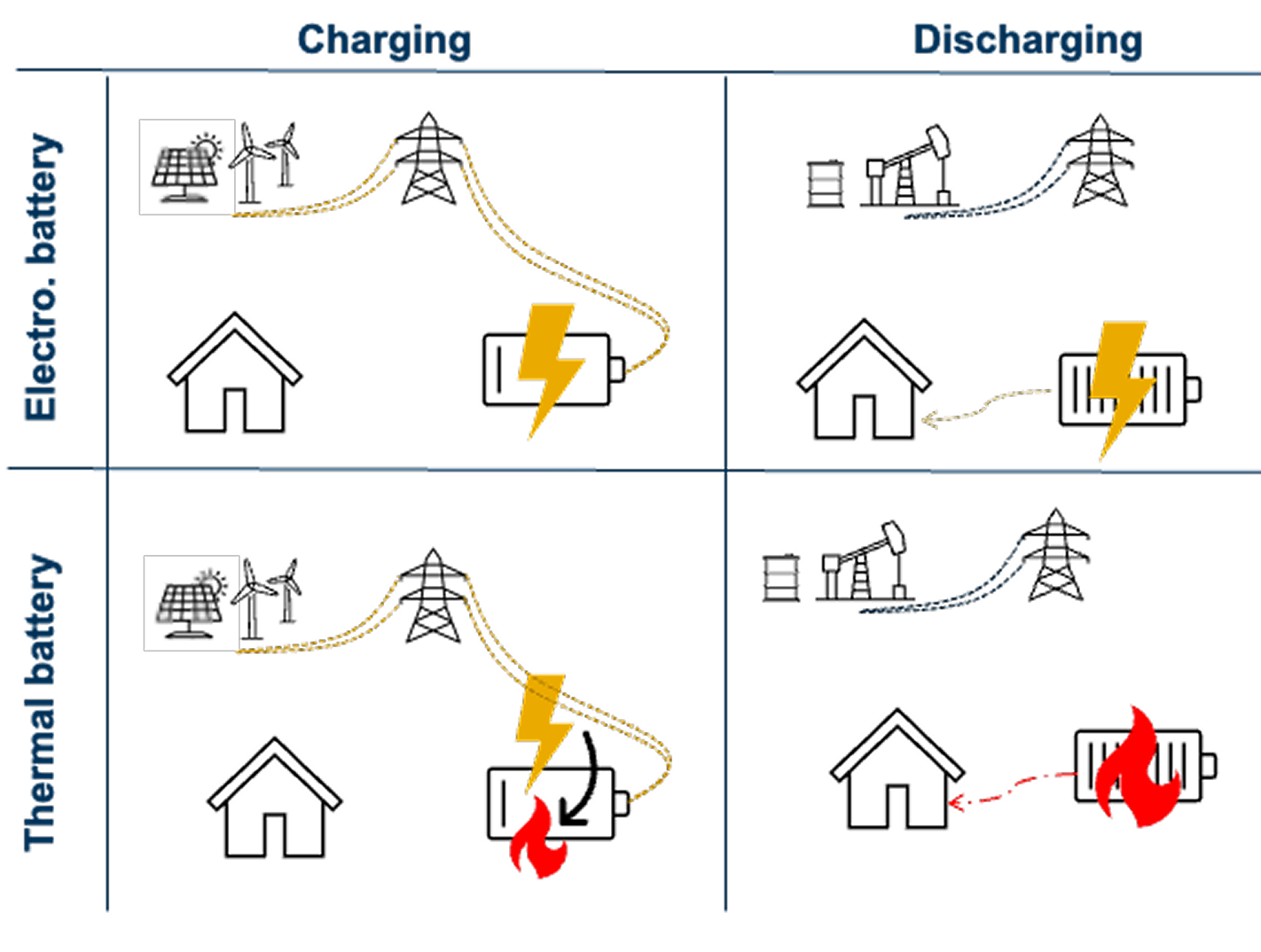
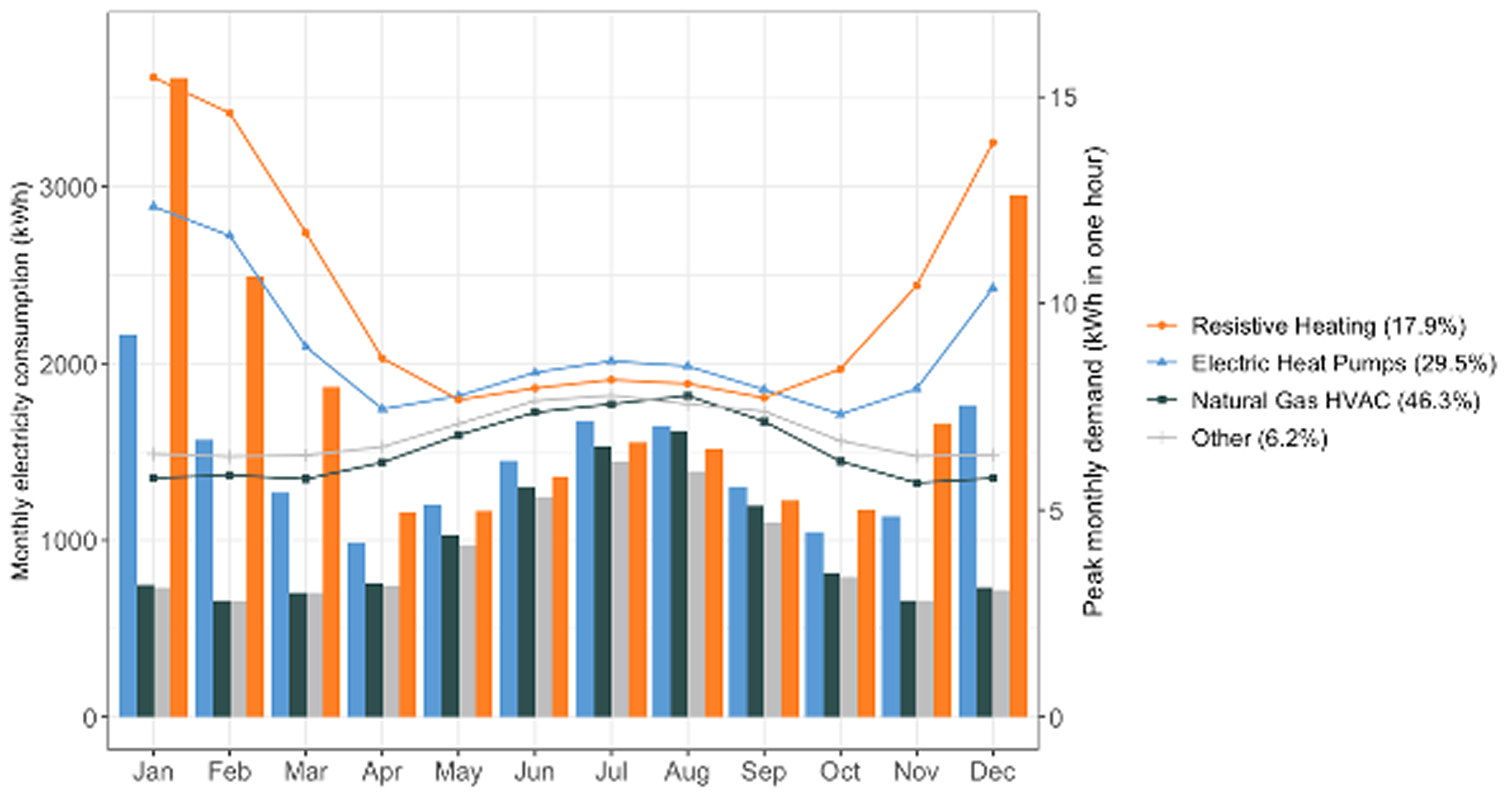
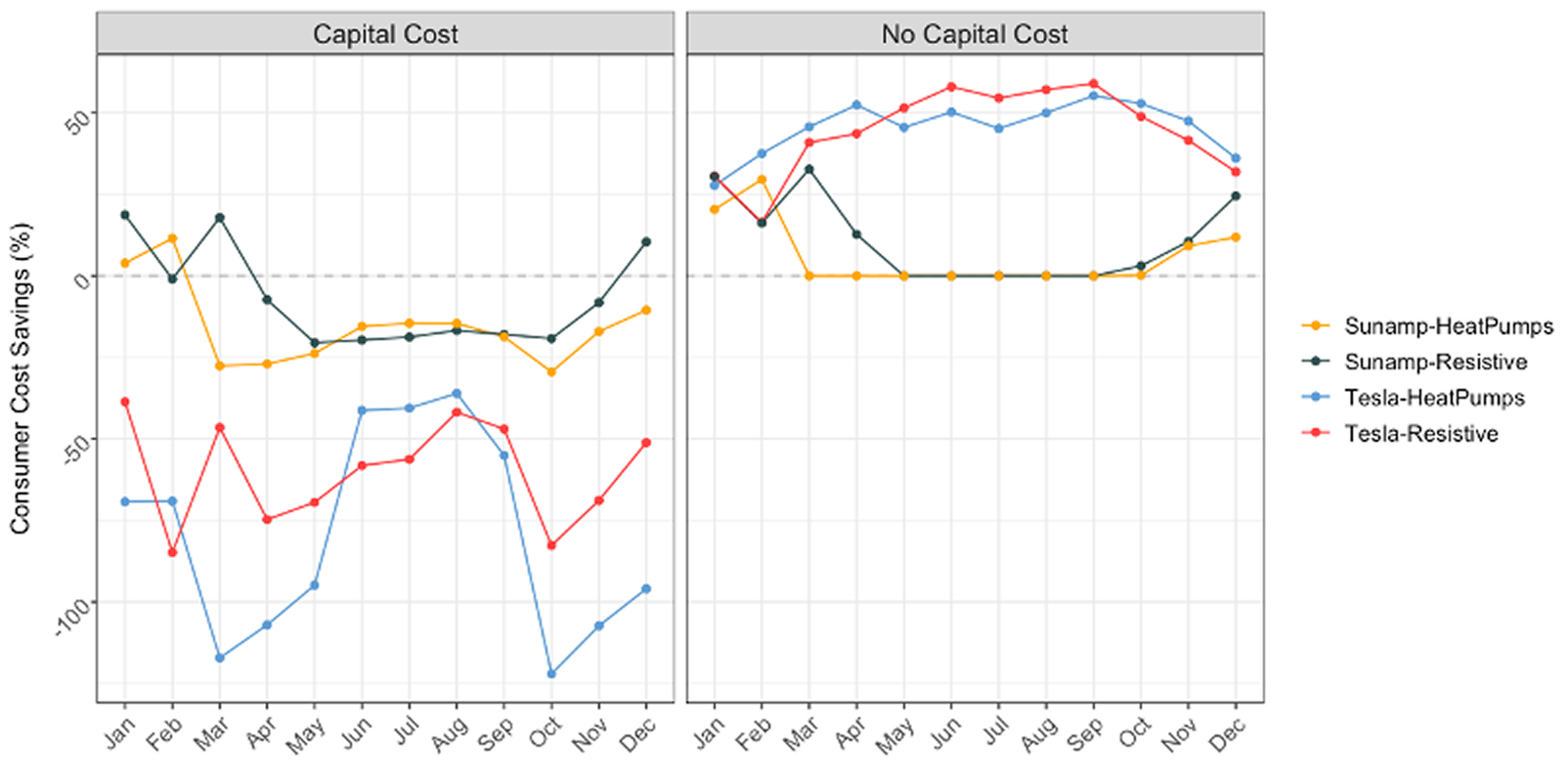
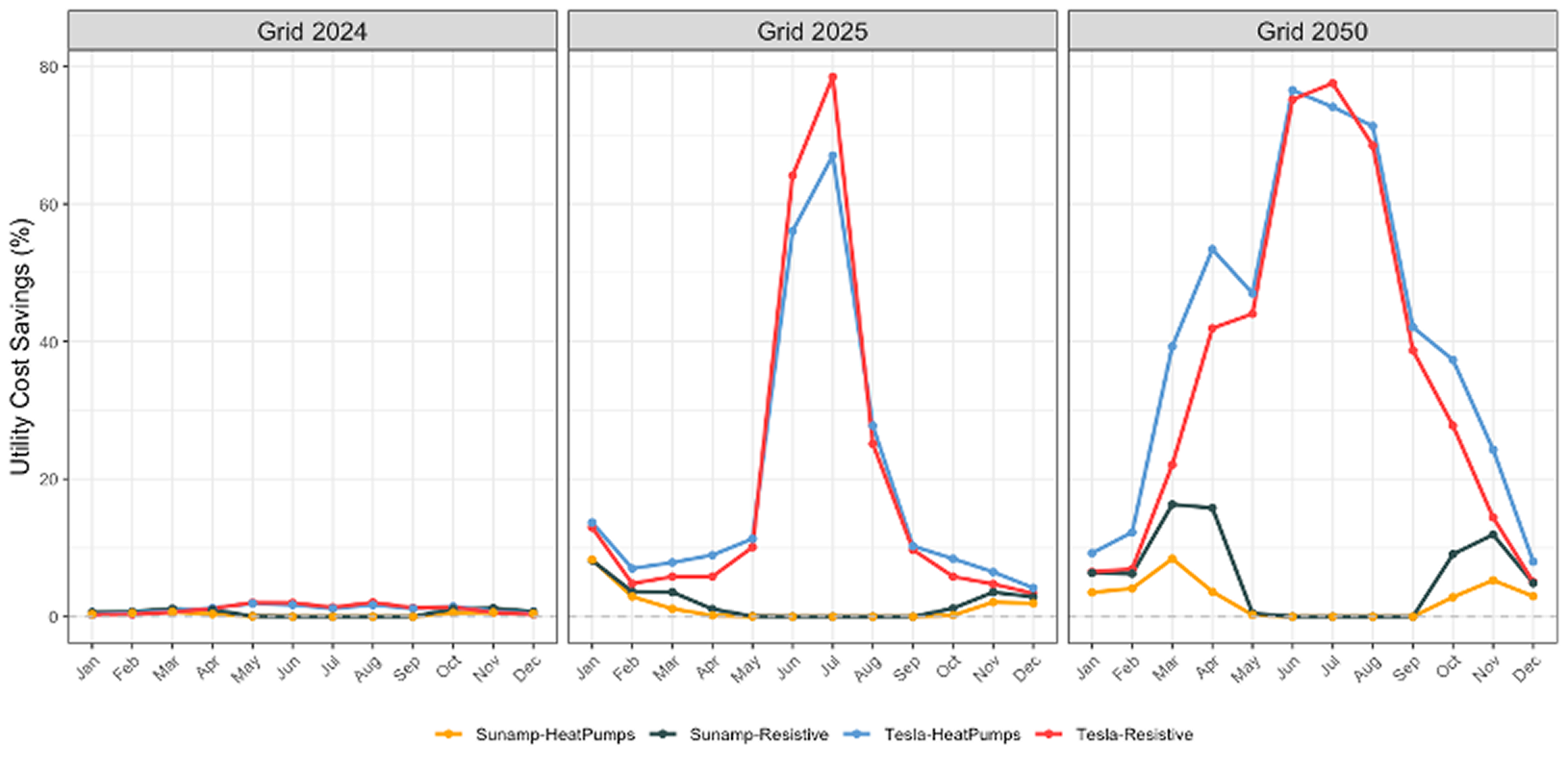
Our analysis of commercially available batteries reveals that neither system recovers its capital cost under current tariff structures in either state, a finding that motivates policy interventions such as rebates and demand response programmes to incentivise adoption. That said, both systems present meaningful opportunities for carbon and utility savings, particularly under projected 2050 grid mixes where renewable penetration is substantially higher. Homes with electric resistance heating show greater potential for battery savings than those with heat pumps, as they consume more electricity for heating. On the technology side, battery capacity saturates customer savings at approximately 50 kWh, and increasing C-rate above 0.5 yields no additional savings unless tariffs explicitly penalise peak demand, suggesting that further improvements in battery power density offer limited economic benefit under current rate structures.
A central contribution of this work is a multi-objective optimisation framework that jointly considers consumer cost, utility cost, and carbon emissions. Current tariff structures in both states tend to drive up utility costs and carbon emissions when only consumer savings are optimised, highlighting a misalignment between individual and collective incentives. However, hybrid objectives that balance all three metrics can achieve substantial fractions of the maximum possible savings for each simultaneously. Custom tariff structures that introduce price differentiation during heating-intensive periods, particularly winter mornings, expand arbitrage potential and move closer to achieving these balanced outcomes. While more work is needed to refine and implement such tariffs alongside complementary policy tools, this analysis demonstrates that aligning consumer, utility, and environmental goals through residential energy storage is achievable with targeted design and policy interventions.