IoT Backscatter
Status: Active
Dates: 2023 to present
Deploying high-density environmental sensors at the scale needed to measure microclimate presents significant maintenance and data management challenges. Manually retrieving data and replacing batteries across tens of deployed devices imposes a large burden on field technicians. Backscatter communications address this by enabling sensor nodes to wirelessly transmit data by reflecting existing radio waves rather than generating their own carrier signals, consuming only microwatts of power and dramatically reducing battery dependence.
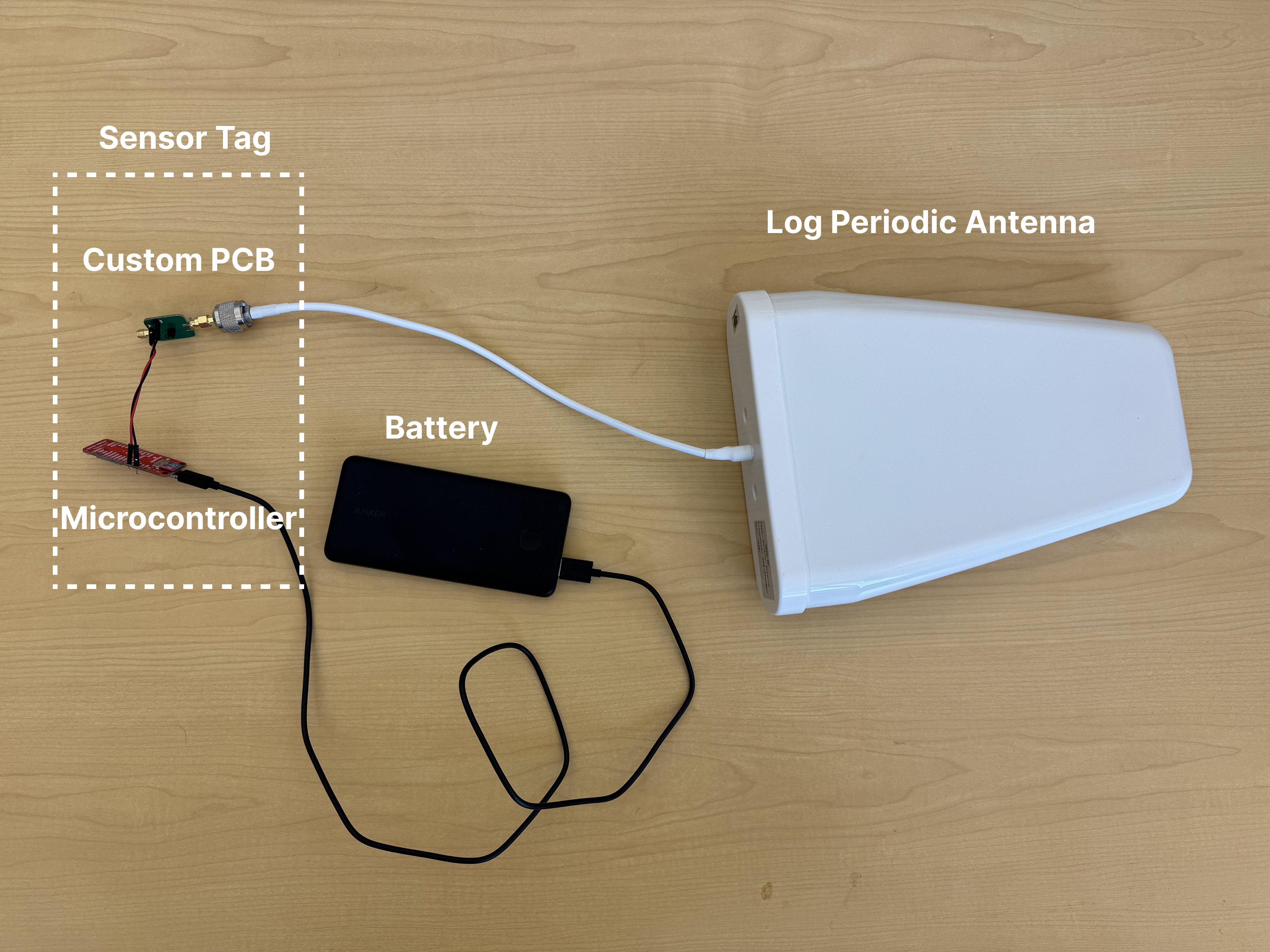
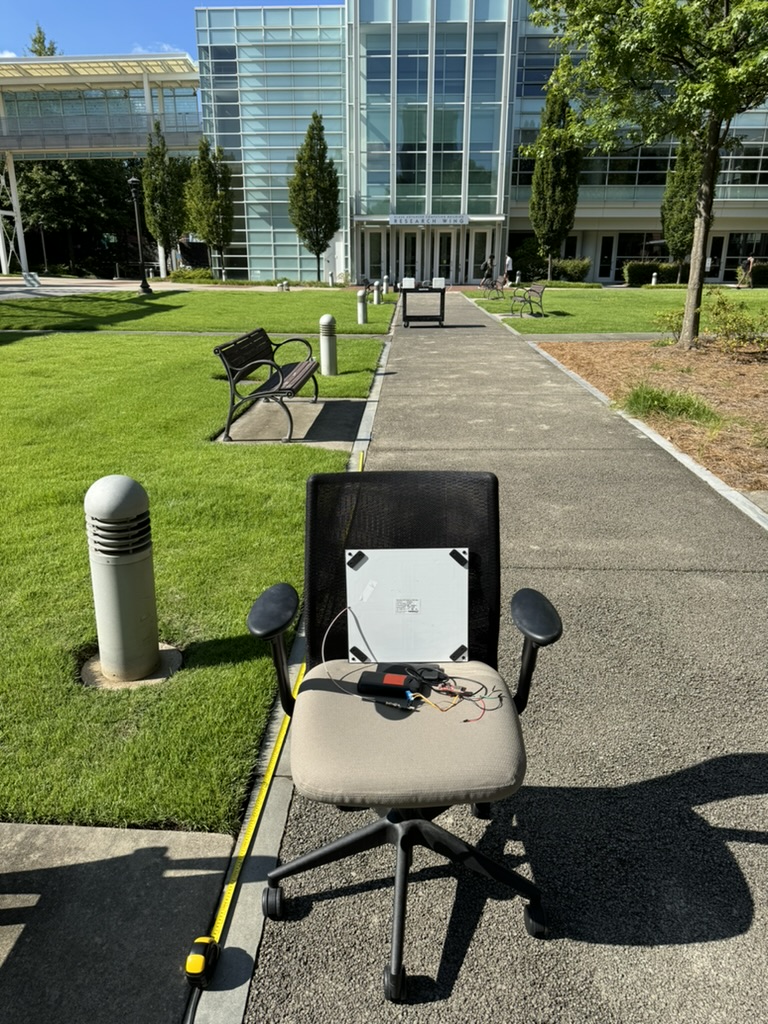
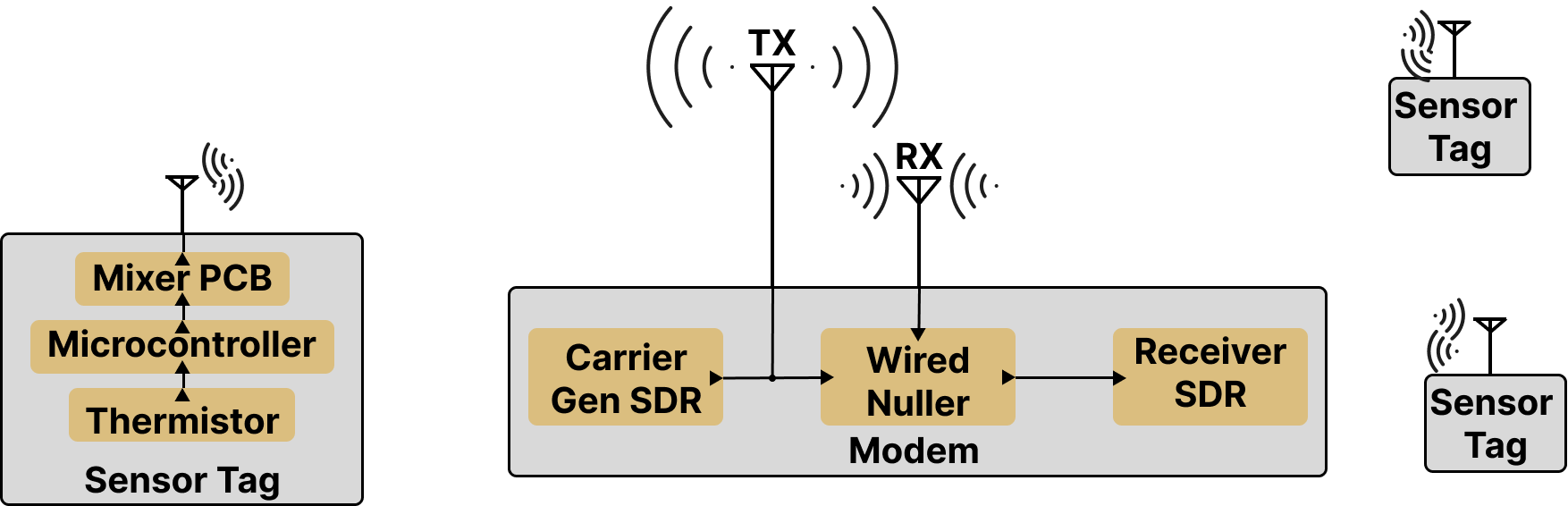
Although backscatter is a well-studied field, few works have focused on translating technological advances into practical systems for environmental monitoring in areas with minimal infrastructure. We are developing a prototype system to aggregate time-series environmental data from tens of devices simultaneously. Using a HackRF One to generate a 915 MHz carrier wave and a USRP N210 as the receiver, we implemented an initial BPSK backscatter system and achieved monostatic communications over 14 meters.
We have since implemented a CDMA spread-spectrum modulation scheme, which trades throughput for improved range and noise resilience, well suited to environmental sensing applications where data rates are low but range and reliability are critical. The primary challenge we are currently working to overcome is channel coherence: because CDMA spreads each packet over hundreds of milliseconds or longer, the transmission duration can exceed the channel coherence time in some environments, causing the receiver to lose phase lock and fail to demodulate the signal. We are conducting experiments to characterise the 915 MHz channel coherence time in rural settings and evaluating design changes to address this limitation meanwhile explorign additional methods to extend range, including analog self-interference cancellation.